24/7 dispatch
4.7681 Google reviews
WreckMaster and I-TECC certified
Family-owned in Evergreen
(303) 674-0198
D&J Towing provides flatbed towing for vehicles that should not roll a single mile on their own tires: AWD and 4x4s, electric cars, low and classic cars, and anything damaged in a crash. The whole vehicle rides on the bed, strapped front and rear, from the roadside or your driveway to wherever it needs to go.
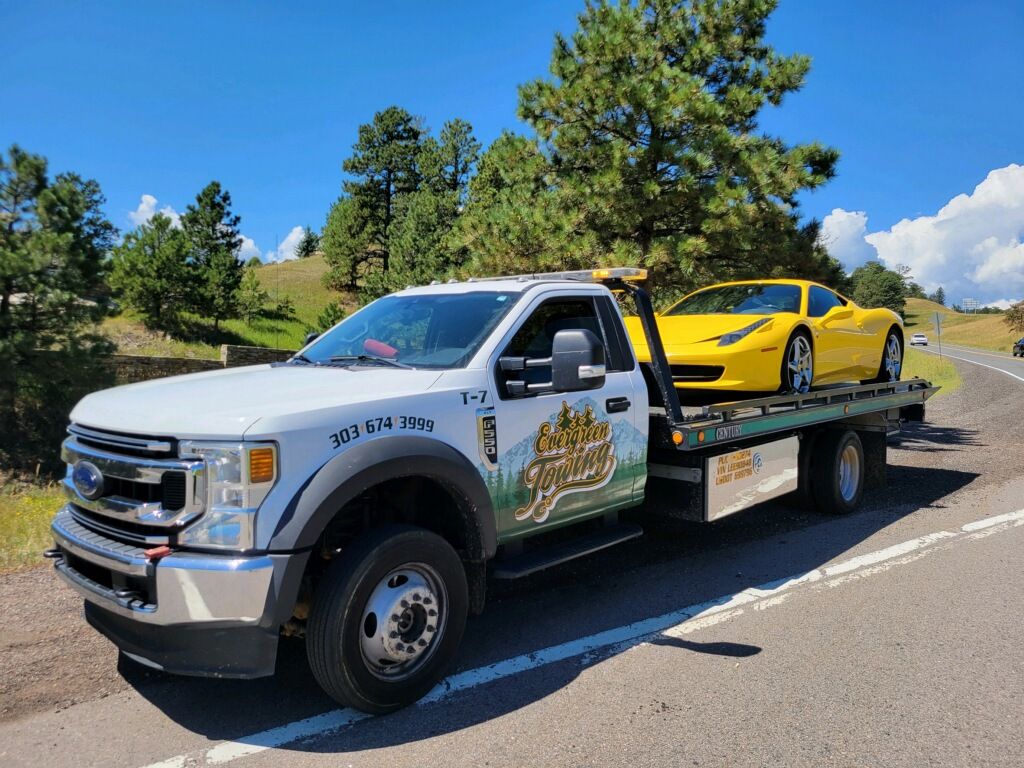 Flatbed
Loaded and level
Five yes or no questions. One yes is enough to ask for a flatbed when you call. Not sure how your car should ride at all? Our light-duty towing page compares a flatbed with a wheel-lift for each drivetrain.
Five questions
All-wheel drive, 4x4, or a crossover with AWD and no badge to say so.
If yes: many AWD owner's manuals require all wheels off the ground, which means a flatbed or a wheel-lift with dollies.
Battery electric cars, trucks and SUVs, whatever the brand.
If yes: Tesla's Model 3 manual names a flatbed as the recommended way to move the car, with all four tires off the ground.
Lowered cars, front splitters, exotics, show cars and older classics.
If yes: on a flatbed the car rides level, held by its tires, with nothing lifting it by a bumper or a valance.
A bent rim, a flat that will not hold air, a broken axle, or a crash hit to one corner.
If yes: a damaged corner cannot be trusted to roll down the highway. On the bed it rides instead of turning.
A long trip, a fresh rebuild, or a car headed to a buyer or a body shop.
If yes: on a flatbed no tire turns on the pavement, so the trip puts no wear on the tires or the driveline.
Any yes means flatbed
If even one answer is yes, ask dispatch for a flatbed. If every answer is no, a wheel-lift may do the job, and dispatch confirms the method for your exact vehicle on the phone.
A flatbed, also called a rollback or car carrier, has a flat steel deck where a wrecker has a boom and hook. Hydraulics tilt that deck and slide it back until its tail rests on the ground, which turns the bed into a ramp. A winch at the front of the deck pulls the vehicle up.
Federal cargo rules for car carriers say a vehicle must be restrained at the front and the rear so it cannot move sideways, forward, back or up. On a mountain grade that matters every time the truck brakes.
"Jeremiah arrived promptly as arranged and did a textbook job getting my vehicle on the newer looking flatbed truck, making sure that he had hooked-up 4 very solid points of contact on the tow vehicle. He was very knowledgeable about his job and was informed about the body shop location and asked about the individual that I had been working with there. Jeremiah also discussed the condition of my vehicle with me and was very knowledgeable about the process from a mechanics perspective. I was extremely pleased with this experience and highly recommend D & J Towing."
Wheel straps wrap over each tire and ratchet down to the deck, so the car is held by the same rubber that holds it on the road. Some makers call for this alone: Tesla says no straps over body panels or through the wheels.
A strap or chain that attaches to the vehicle itself goes on the mounting points its maker designed for that job. Never a bumper cover, and never a suspension arm.
Polished rims, a new paint job or aftermarket body parts change where a strap can safely go. Mention them when you call so the operator plans the tie-down before arriving.
Plenty of flatbed calls are not emergencies at all. A project car that has not run in years, a classic headed to paint, a car that needs to reach the shop handling your claim. The drop-off is your call, and the operator unloads it right where you want it parked.
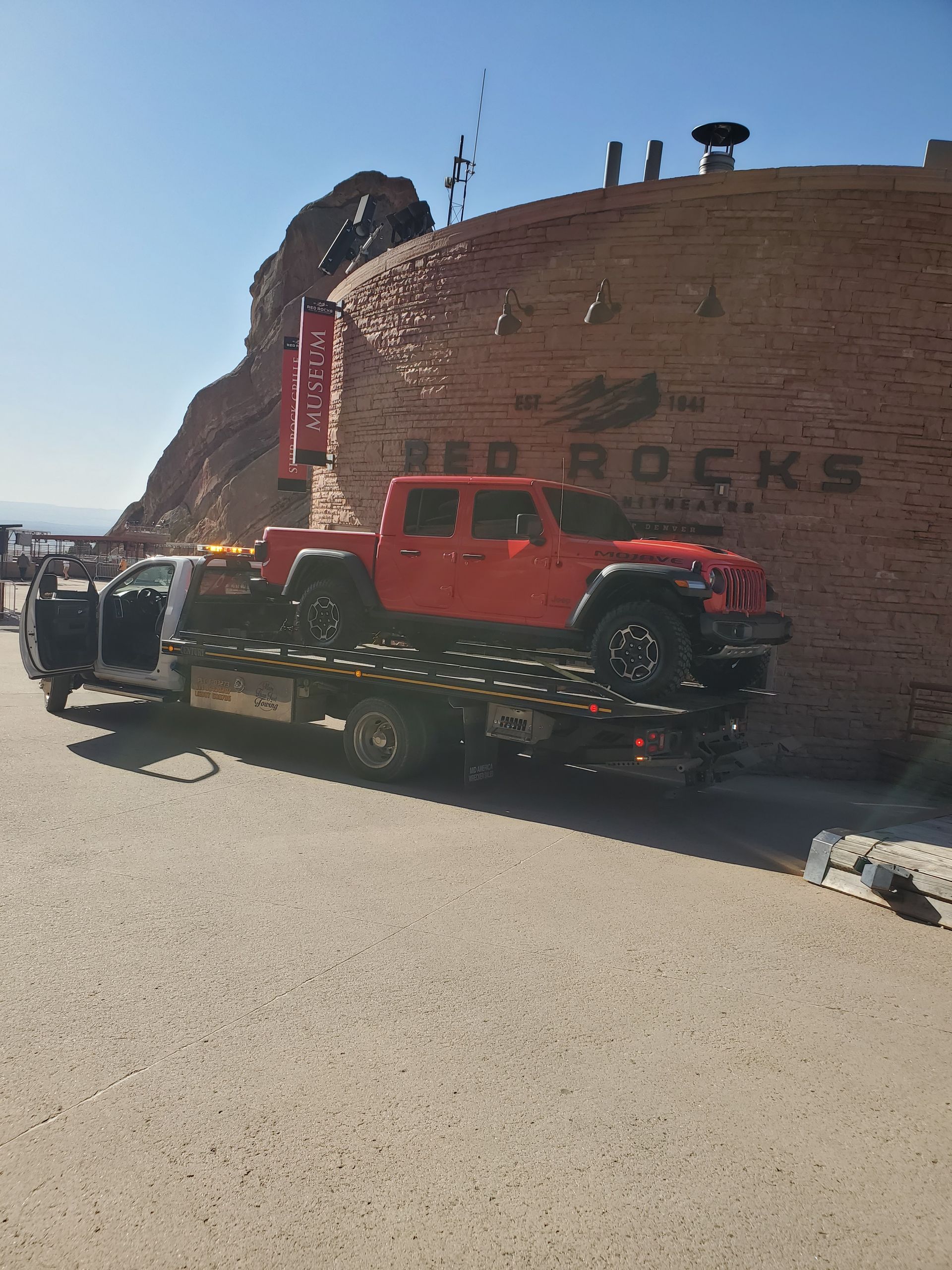
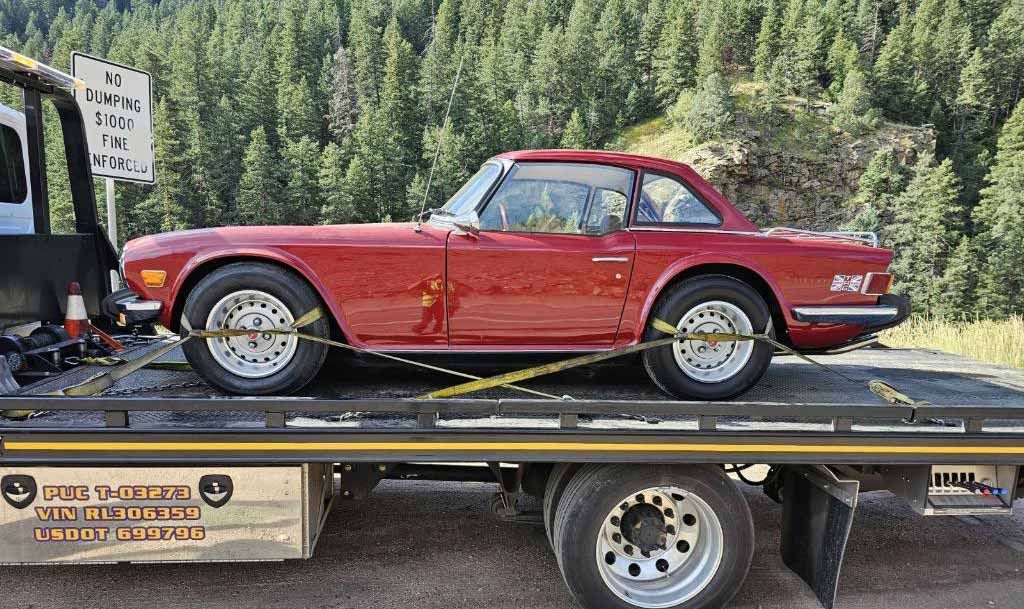
A rollback needs room and a decent footing to load well. D&J has worked the roads around Evergreen since 1984, and these are the details our drivers plan around before the deck ever tilts.
The deck lays down behind the truck, so it needs a run of road in line with your vehicle. On a winding cabin drive, the car may have to be pulled to a straighter spot first.
On snowpack a car can slide sideways while the winch pulls. Tell dispatch if it sits on ice so the truck can be set up for it.
Heading down I-70 or US 285 means a lot of braking. Front and rear tie-downs keep the vehicle from creeping forward on the deck.
Where the drive is steep and the car sits low, the deck angle decides whether a front lip clears. The operator checks it before the cable goes tight.
Flatbed towing runs 24 hours a day, every day of the year, for breakdowns and planned moves alike. Here is how the call usually goes.
There is no flat rate for a flatbed tow. These five things set the number dispatch quotes you.
Answers to common flatbed questions. Anything else, ask dispatch when you call. Every flatbed call is part of the full list of towing and recovery services D&J runs out of Evergreen.
A wrecker or wheel-lift raises one end of the vehicle and lets the other two wheels roll on the road. A flatbed tilts its whole deck to the ground, winches the vehicle on, and carries it with all four wheels off the pavement.
It is tied down at the front and the rear. Straps go over the tires or attach to the tie-down points the manufacturer built into the vehicle, never to a bumper cover.
Yes. Give dispatch the address when you call so the quote covers the full trip. An accident vehicle stored in our yard can be towed from it to an auto body shop or a private residence.
Usually, yes. Many EVs have a tow or transport mode that lets the wheels roll slowly, just long enough to winch the car onto the bed. Tell dispatch whether the screen still works so the operator knows what to expect.
It depends on the distance, the vehicle, how hard it is to load, the time and road conditions, and any extra work such as a winch-out. Dispatch quotes the tow on the phone before the truck is sent.
Say "flatbed" when dispatch answers, along with the year, make and model, and we will send the truck that keeps every wheel off the road. Broken down on the highway right now? The same number runs 24/7 emergency towing.