
DitchW-01
Roadside ditch
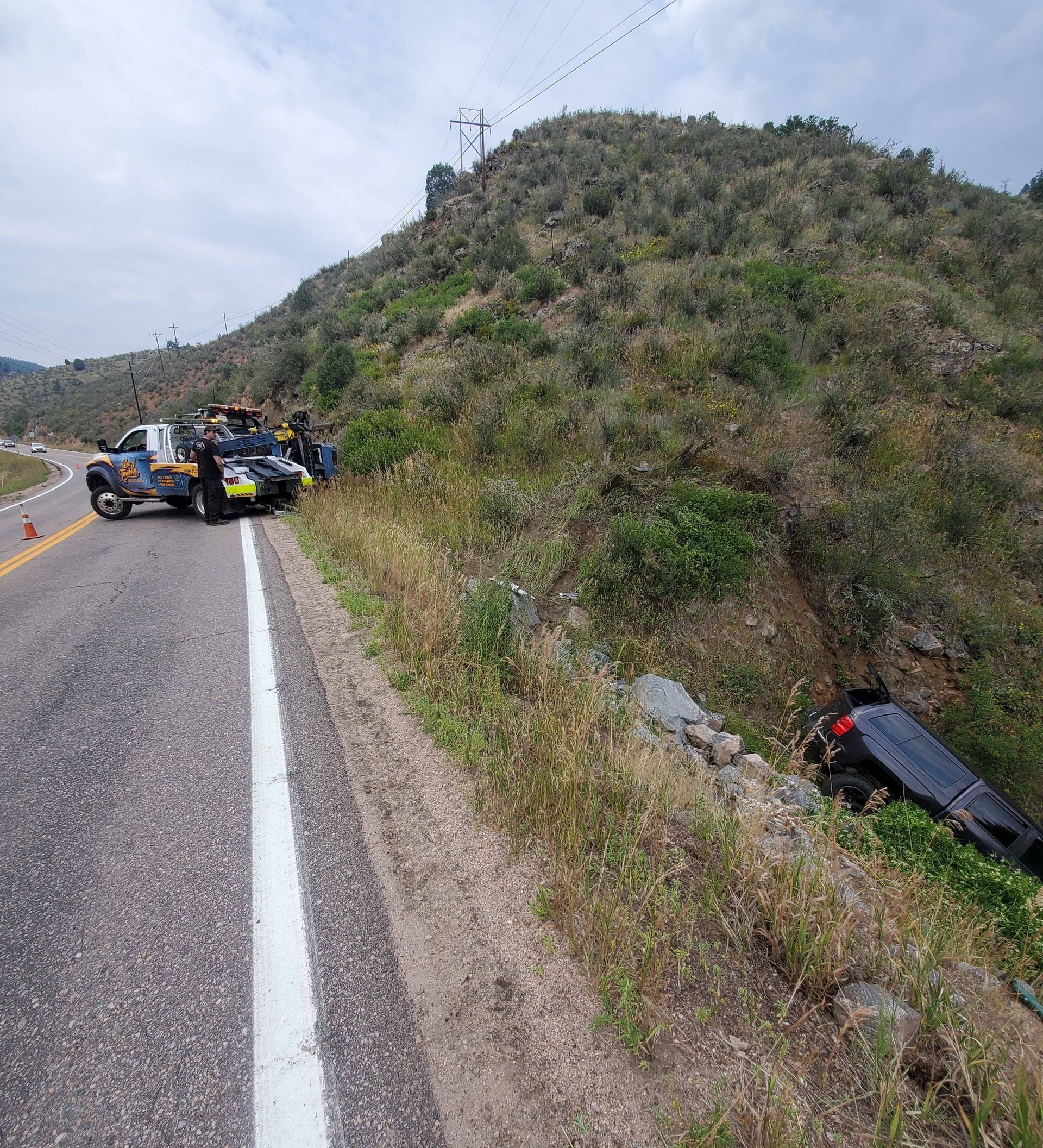
Two wheels slip off the edge of a two-lane road and the vehicle settles into the ditch line, nose down or sideways.
What the pull has to doBring the vehicle up at an angle that keeps the underside off the pavement edge.
Our winch-out service pulls stuck cars, pickups and vans out of ditches, snowbanks, mud and icy driveways and back onto solid ground. When the vehicle is undamaged, you drive away on your own. D&J Towing has been answering slide-off calls in the Colorado foothills and Denver metro since 1984, 24 hours a day.
Four quick questions sort a simple pull from a bigger recovery. The answer tells you what to say when you call, so dispatch knows what kind of pull it is before the truck leaves.
Read the scale
Find the line on the stuck scale that matches your situation. If anyone is hurt, there is smoke, or the vehicle is blocking a travel lane, call 911 first. For everything else, call us at (303) 674-0198 and describe where the vehicle is and how it is sitting.
Is anyone hurt, is there smoke, or are you blocking a lane?
Safety comes before the pull.
Where is the vehicle stuck?
Pick the closest match.
How is the vehicle sitting?
Look from a safe spot, away from traffic.
Did it hit anything on the way?
A tree, rock, post, guardrail or another vehicle.
Standard winch-out
A standard winch-out should get you moving.
Rather talk it through? Dispatch answers around the clock at (303) 674-0198.
The farther down the scale, the more line, rigging and setup the job takes. Every level starts with the same call.
A winch-out is a controlled pull. The truck stays on solid ground, a winch line runs to the stuck vehicle, and the vehicle comes back up and out instead of being lifted onto a bed. Each of these situations calls for a different angle and pace.
Two wheels slip off the edge of a two-lane road and the vehicle settles into the ditch line, nose down or sideways.
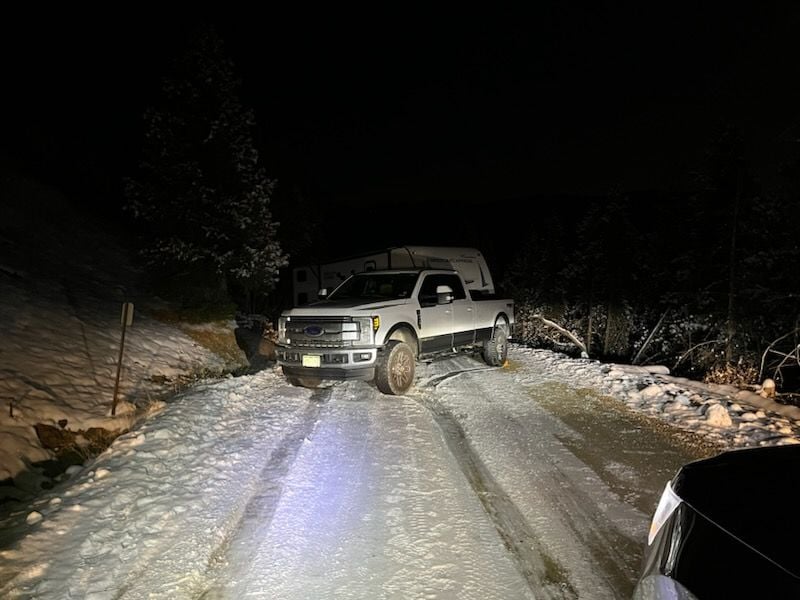
Packed snow builds up under the frame and lifts weight off the tires, so they spin no matter how gently you press the gas.
Foothill driveways are steep and often curved. Add ice in winter or mud in spring and a two-wheel-drive van or truck has no grip at all.
Mountain shoulders are narrow, and the dirt beside the pavement can sit well below it. One side drops and the vehicle tips toward the slope.
While you wait, the Colorado State Patrol advises staying inside your vehicle unless you are in immediate danger, turning on your hazard lights, making sure the exhaust pipe is clear of snow, and running the engine just enough to stay warm.
Most of the work happens before the winch turns. A pull that is set up right is slow and uneventful.
Tell dispatch where you are, what you drive, and how it is sitting. Ask for a quote while you are on the phone.
The operator parks the truck on solid ground, turns on the warning lights, and looks over the ground between the truck and your vehicle.
The line is attached to solid points on your vehicle, and the angle is planned so the vehicle comes out straight.
The winch brings the vehicle back a little at a time. You may be asked to steer, or to stay well clear of the line.
Once it is on solid ground, the vehicle is unhooked and checked. If it drives right, you are on your way. If not, we tow it.
D&J's crew includes WreckMaster and I-TECC certified professionals, and the company is a member of the Towing and Recovery Association of America and Towing and Recovery Professionals of Colorado. We also serve AAA members.
 Past a simple pull
Plenty of slide-offs stay simple. Some do not, and it helps to know which side of the line you are on before you call, because the setup is different.
A vehicle on its side, on its roof, or far down an embankment needs accident recovery, planned around the damage, the slope and where the vehicle goes next.
Jeeps and trucks stuck on dirt roads and trails away from pavement fall under off-road recovery, where reaching the vehicle is part of the job.
Semis, dump trucks and other units over 26,000 pounds need heavy-duty towing equipment for the pull.
And if the vehicle will not drive safely after a winch-out, the same truck can tow it to your shop or home.
No two pulls are the same, so the price depends on the job in front of the truck. These are the things that move it.
Describe the situation when you call and ask for a quote. We accept:
"D&J Towing helped us out when we were really in a bind in Evergreen. An electrician working at our property got stuck in our extremely steep driveway because of mud and ice. He was in a two-wheel-drive Sprinter van and had no chance of getting out on his own. We called D&J, and they arrived within about 15 minutes and quickly pulled him out with no issues. What impressed me even more was their honesty. They actually charged me less than the amount they originally quoted. Fast, professional, and fair. I would absolutely recommend D&J Towing to anyone who needs help in the Evergreen area."
Not sure what you need? Call dispatch, describe what you see, and we will tell you whether it is a winch-out or something more.
A winch-out pulls your vehicle out of a ditch, snowbank, mud or a slick driveway and back onto solid ground so you can drive it away. A tow loads the vehicle and takes it somewhere else. If the vehicle will not drive safely after the pull, we can tow it.
Yes. Steep driveways with ice or mud are a common winch-out call in the foothills, especially for two-wheel-drive vans and trucks. Tell dispatch how steep the driveway is, what the surface is like, and how much room there is near the vehicle.
Unless you are in immediate danger, the Colorado State Patrol advises staying inside your vehicle with your hazard lights on. Make sure the exhaust pipe is clear of snow and run the engine just enough to stay warm. If anyone is hurt or the vehicle is in a travel lane, call 911.
It depends on how far the vehicle is from solid ground, the slope and surface, the size of the vehicle, access for the truck, the time and weather, and whether a tow is needed afterward. Describe the situation when you call and ask for a quote. We accept cash, Mastercard and Visa.
Yes. D&J Towing is open 24 hours a day, 7 days a week, 365 days a year, holidays included. Call (303) 674-0198 any time.
Tell dispatch where you are, what you drive and how it is sitting, and a truck heads your way. Ditch, snowbank, icy driveway or shoulder drop-off, day or night, dispatch answers 24/7.