24/7 dispatch
4.7681 Google reviews
WreckMaster and I-TECC certified
Family-owned in Evergreen
(303) 674-0198
D&J Towing handles accident recovery around the clock, from a damaged car on the I-70 shoulder to a vehicle that went down an embankment, into the trees or onto its roof. We pull it back to the road, load it, and take it where you need it to go.
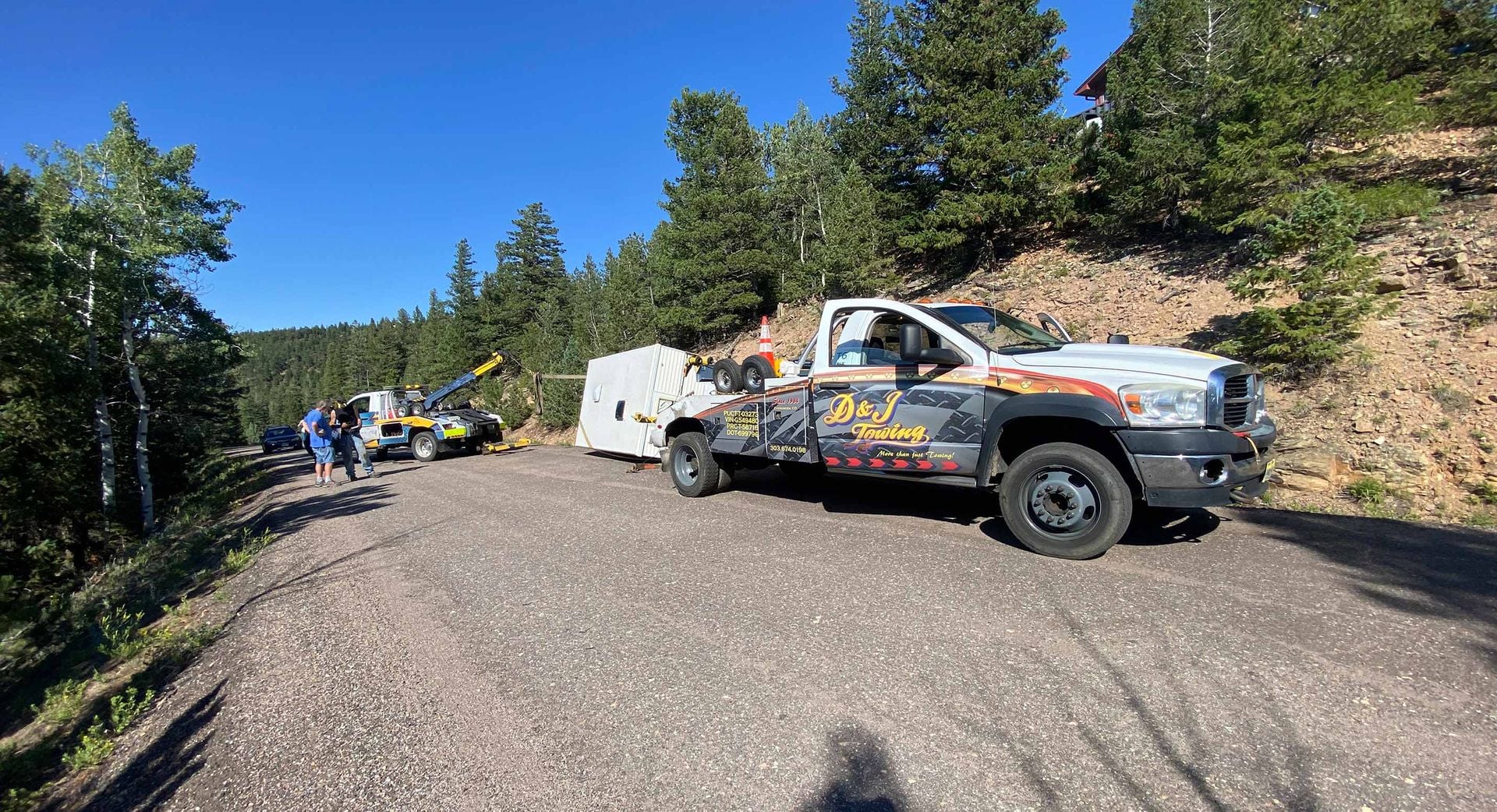 Scene to destination
Most people have never had to do this before. Work through these in order. The tow is step four for a reason: people come first, and the law asks for a few things before the truck arrives.
If anyone is hurt, call 911 right away. Stay buckled in if you are stuck in a traffic lane and cannot get clear of passing cars.
When no one is hurt, no drugs or alcohol are involved and the vehicles still drive, Colorado law requires drivers on a divided highway like I-70 to move off the traveled lanes as soon as practicable: to the shoulder, a pullout, an off-ramp or a nearby cross street.
Once you are safe, call 911 or law enforcement with your location. Trade names, addresses, phone numbers, license numbers, plates, vehicle make, model and color, and insurance carrier and policy numbers.
Call (303) 674-0198. Tell dispatch where the vehicle is and how it is sitting. The scenarios below show what helps most.
Your home, a body shop, or our approved storage yard while insurance sorts it out. Not sure yet? The yard holds it while you decide.
Every recovery starts with where the vehicle is sitting. Pick the one that matches yours to see how we approach it and what to tell dispatch so the right truck shows up.
This is the I-70, US 285 and CO 74 crash: two damaged cars, traffic going by, sometimes police on scene. The job is to get the vehicles loaded and the lane open without putting anyone at more risk. A car that cannot roll or steer usually rides on a flatbed. Heavier trucks and trailers get a heavy-duty unit; see heavy-duty towing.
Tell dispatch
The vehicle left the road and sits somewhere below it. The wrecker stays up top on solid ground, the line runs down to strong points on the vehicle, and it comes up the slope slowly, with stops to check how it is riding. At the top it is loaded for the trip. If nobody crashed and the car simply slid into a ditch or snowbank, that is a winch-out, usually a shorter job.
Tell dispatch
Trees that stopped the slide are now in the way of the pull. A straight yank drags the vehicle into the next trunk, so the operator plans the angle first, may redirect the line through rigging, and moves the vehicle in short stages. The goal is no more damage than the crash already did.
Tell dispatch
A rollover gets uprighted before it goes anywhere. Lines are set so the vehicle comes back onto its wheels under control instead of slamming down or rolling past, then it is loaded. Fluids can leak while it is on its side, so tell dispatch so the crew comes ready for it, and call 911 first if you see smoke or smell fuel.
Tell dispatch
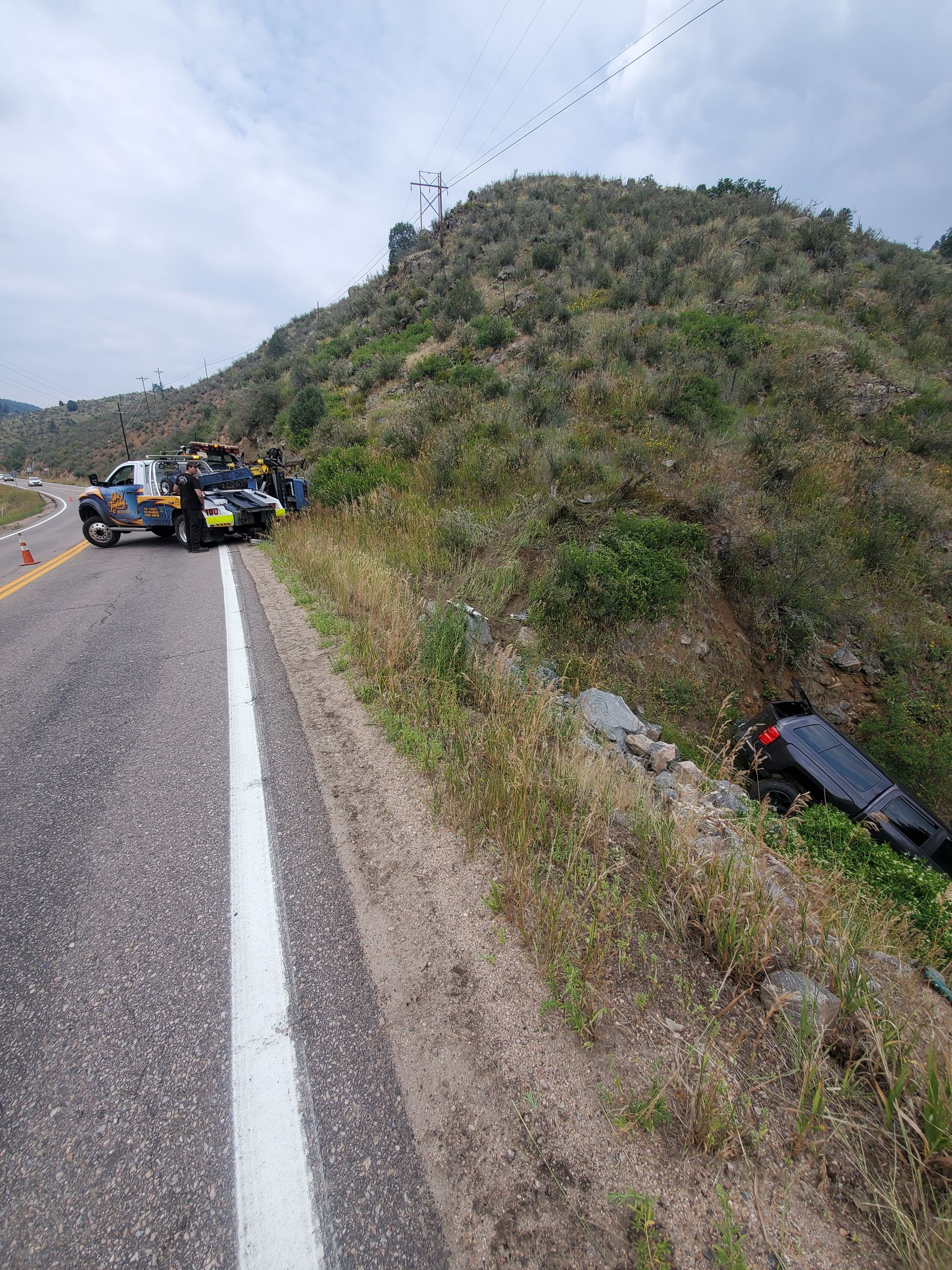
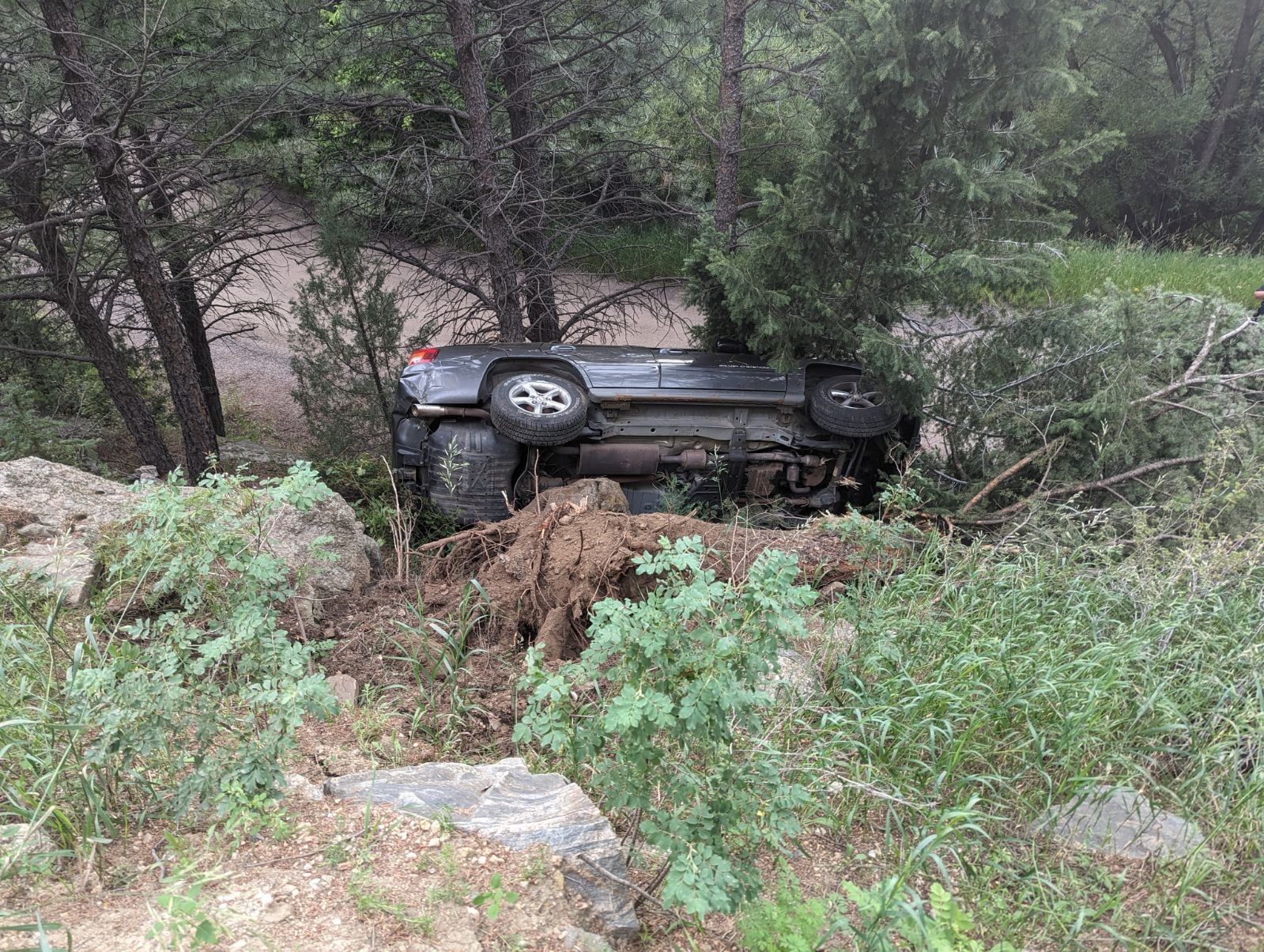
Recovery work by certified professionals from a family-owned Evergreen company.
From the road it can look like one long pull. It is a sequence, and each step decides whether the vehicle comes out with no new damage.
A crash on a flat city street is a hook and go. Up here, the road itself makes the recovery harder, and D&J has worked these roads since 1984.
Interstate crashes happen at speed on long climbs and descents. Setting up the scene safely comes before anything is hooked.
Canyon stretches of CO 74 and US 285 leave little room to park a truck, and a car that leaves the road can land well below it.
Winter crashes often come in groups and in the dark, on the same slick pavement our trucks have to work from.
Coverage drops in the canyons. Save (303) 674-0198 now so you are not searching for a number with one bar.
"We were in an accident on a snowy and icy I-70. Jean the dispatcher and Joe the truck driver were excellent. They both were so accommodating and eased the stress of a traumatic situation! They gave us great advice and great service!"
No two recoveries are priced the same, because no two sit the same way. Here is what moves the number, and the three places a crashed vehicle can go from the scene.
Ask dispatch about cost when you call. We accept cash, Mastercard and Visa.
A common choice when insurance is involved. The vehicle waits safely at our approved yard in Evergreen while the adjuster inspects it. The full release and claim process is on our impounds and accident storage page.
Already have a shop you trust? Give dispatch the name and address and we take it straight there.
If you would rather keep it at the house while you decide, we drop it in your driveway. Steep or tight drives are normal work for us.
For anything not covered here, call dispatch. Every towing and recovery service we offer is listed on our services page.
Call 911 first if anyone is hurt, if there is smoke, fire or a fuel smell, or if a vehicle is stuck in a travel lane. Once people are safe and the crash is reported, call us at (303) 674-0198 for the tow.
Yes. Embankment and off-road recoveries are regular work for us in the foothills. The wrecker works from the road above and winches the vehicle back up in controlled stages before it is loaded.
Yes. We upright vehicles that are on their side or roof, and we handle light-, medium- and heavy-duty towing, including semis and commercial vehicles. Tell dispatch the vehicle type and whether a trailer is attached so the right truck comes.
Wherever you choose: your home, a body shop, or our approved storage yard in Evergreen, where it can wait for the insurance adjuster. Accident vehicles that later leave our yard can only be towed to an auto body shop or a private residence.
It depends on how hard the recovery is, the size of the vehicle, the equipment and time on scene, the weather and traffic conditions, and how far the vehicle goes after loading. Ask dispatch about cost when you call.
Once everyone is safe, one call gets a recovery truck rolling toward you, day or night. Tell dispatch the road, the nearest mile marker and how the vehicle is sitting, and we will take it from there.